 Free Click & Collect within 30 minutes
 Free delivery on orders over £39.99
 Free Next Day Delivery on orders over £75
 Gift Cards available

How to Play Magic: The Gathering TCG
12 min read
Last Modified 23 June 2026 First Added 23 June 2026
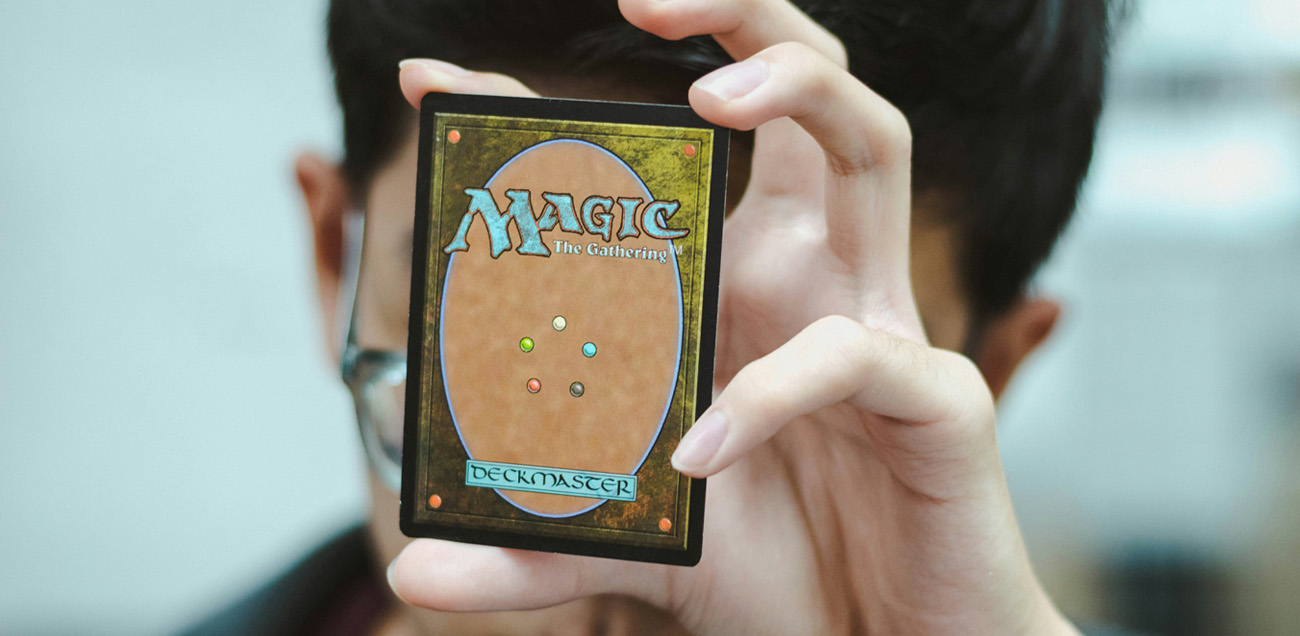
Magic: The Gathering (MTG) is an epic fantasy game played by millions worldwide. Arguably the original trading card game as we know them, MTG laid the foundations for what tabletop card games should be and continues to develop new and exciting ways to play.
The premise is simple, you are a mighty magic user who summons mythical creatures and uses spells to defeat your opponent, but they can defend themselves with their own dark and dazzling creatures, enhanced artifacts or other tricks up their sleeves.
You can collect cards and build your own decks to suit your individual style of play or buy pre-built decks to be able to instantly jump into the action. Here, we run over the basic steps to play so you can plunge into the magic and cast your way to victory.
The anatomy of your ‘board’ or play area is key to keeping track of what is happening during the game. A clear and well-defined layout will help you and your opponent both get a grip on what has happened so that you can plan ahead or react effectively to the goings-on of the game.
Your deck of cards is called your ‘library’, and you draw from this to find the spells needed to engage in battle. Usually placed to your right to be able to easily draw from, this should be shuffled before every play so that your opponent knows you are not stacking cards in a deliberate manner.
You will also need a space for your ‘graveyard’, a discard pile where spent spells, defeated creatures and destroyed artifacts go. Most players put this beneath or next to their library. However, because you’re a powerful magic user, the graveyard doesn’t necessarily mean cards are entirely out of the game as you may be able to resurrect or recycle them.
If a card is removed entirely from the game, it goes into ‘exile’ so an exile pile far away from proceedings is a good idea. You also have your hand, where you draw cards into, which should only be seen by you (unless your opponent has a spell that reveals it), so play your cards close to your chest.
If you play a permanent card (a card that stays on the field of play until defeated or destroyed) then it goes into the battlefield. This is the playing area in front of players where they amass their armies and items.
You’ll also need a way to track your life total. Players should start with 20 life points and so a twenty-sided die, life counter or app can all help you keep an eye on your health throughout the game.
Understanding what’s in front of you and what each card’s abilities are is key to utilising their strengths. Reading the cards may seem quite complex to the untrained eye but it’s perfectly simple to get the hang of.
In the top left-hand corner is the name of the card. Each card will have a name so that you know what you’re referring too, often with an associated backstory or lore. In the top right-hand corner of the card is its ‘mana cost’. ‘Mana’ is the magical resources you need to cast each spell or summon creatures and so the mana cost of a card is how much of this you will need. Sometimes this will be a specific type of mana or just generic.
Below the card’s artwork with be its ‘type line’. This tells you what type of card it is, so that you know whether it’s a creature, spell, artifact or other. On the right of the type line will be a symbol that represents which set or expansion the card is from as well as showing how rare it is. A black symbol is common, a silver symbol is uncommon, a gold symbol is rare, and a mythic card is mythic orange.
Below this is the text box. This is what tells you what abilities your card has and how they can be activated. Some cards may have more abilities than others and may take different actions with different mana costs to trigger them. The text below this in italics is flavour text, often from the lore of the set the card comes from to help add some character or context to the card but it doesn’t affect the game.
On creatures, there will be numbers on the bottom right of the card indicating their subsequent ‘power’ and ‘toughness’. Effectively, this is their attack and defence, with power being how much damage a creature can deal and toughness being how much damage it can take.
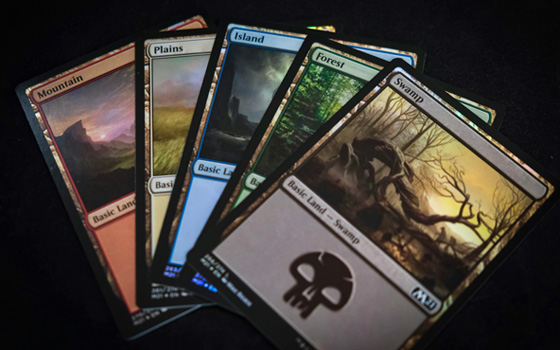
All cards can be separated into two types, permanent and non-permanent. A permanent card stays on the battlefield once cast while a non-permanent goes into the player’s graveyard once its action has been resolved. Permanents are usually physical creatures, beings or artifacts and non-permanents are typically magical abilities.
‘Lands’ are most likely where you will source your mana from and you won’t be able to cast spells without them. You can play one land during the main phase of your turn and are the only cards in the game not considered spells.
‘Creatures’ are permanents that can attack your opponents or defend you in the heat of battle. They may have special abilities or may just have the brute force required to dish out some pain to other players.
‘Planeswalkers’ are a very specific type of creature card that represent very high-level wizards. They do not have power or toughness numbers but rather a singular number that is their loyalty counter. They will also have several abilities on them that will cost loyalty points to use during the main phase of your turn, once they have 0 loyalty points they go to your graveyard. Opposing players can choose to attack Planeswalkers directly or target them with spells during their turn rather than launching an attack directly at the player. In this case, the remaining loyalty counters on the card acts as their toughness.
These are permanent cards that can be cast during your main phase and usually allow for lingering magical effects to be used time and again during play. ‘Artifacts’ will typically require a mana cost to activate their effects whereas ‘enchantments’ will usually add or take away capabilities of the card they have targeted.
‘Sorceries’ are powerful spells that can only be played during a player’s main phase and can affect the board or players.
‘Instants’ are similar to sorceries but can be played at any time and often have reactionary magic to protect against attacks or enhance an action of other cards.
There are other special cards that may appear in a game, but these are the most likely cards you’ll come across during your magical matchups.
If you have a spell in your hand, you must declare you are going to cast it before bringing it onto the battlefield. Then you must pay for it, so this is where you need to know its mana cost. Look at the top right-hand corner of the card and then tap the corresponding lands to pay for the card to enter the battlefield. These lands can no longer be used again until they are untapped, at the start of the player’s next turn.
Some cards will need a specific type of mana, like mountain or forests – which will be represented by the corresponding symbols to those lands, to play and others will just need a generic payment of any mana, which will be represented by a number. Allow for the opponent to respond once the card is cast but if they can not do anything, the card is now on the battlefield. If a spell has a target, be it player, creature, artifact or enchantment, you must declare the target.
If the opposing player can respond or there is something already in play that makes the spell go away before it has any effect on play, the card “fizzles” and is immediately placed in the graveyard.
Declare your spell, pay for it, wait for a response and then resolve the effects.
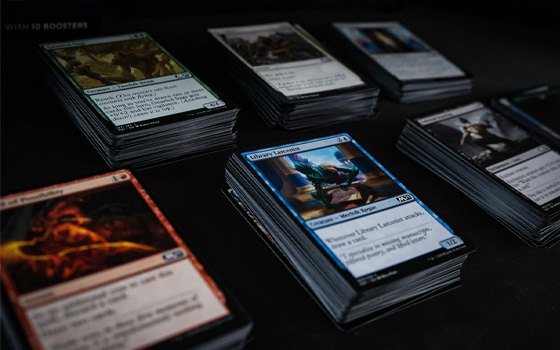
Once you’ve set up the board, players must decide who goes first. This is typically decided by a coin flip, dice roll or deck cut but players can use any method that they all agree on. Once you know who is going first, shuffle your deck and allow your opponent to cut it to make sure it is truly randomised, putting the top part on the bottom of the deck.
Now both players draw a hand seven cards to begin with and if a player is unhappy with their hand, they can ‘mulligan’, shuffling the hand back into the deck and drawing another hand but with one fewer card. When all players are happy with their hands, the game can begin
Each of your turns will be broken up into phases. The beginning phase has three steps, which is untap, upkeep and draw. The untap phase is where you untap any tapped creatures, lands or other spells that were tapped in the last turn to attack or activate their abilities. The upkeep phase is usually irrelevant unless there is a card that specifically has an ability that triggers during it. The draw step is where you draw your card for the turn. Draw just one card, regardless of how many you’ve played beforehand.
The main phase is when you can play your lands and spells. You can only play one land each turn but you can cast as many spells as you like providing you have the mana.
Combat is the core part of MTG, and the combat phase involves several steps. At the begging of combat, players can cast instants but otherwise you then move to the next step where you declare your attackers, citing which creatures are attacking and who their target is. Tap the attacking creatures to show they are now in combat.
The defending player then gets to declare which, if any, creatures are blocking the attack. They can let the damage straight through if they so wish but this is usually unwise. Any number of untapped creatures can block an attacking one.
Then the damage step kicks in. For a single creature blocking a single attacker, the power of the defender is taken from the attacker, and vice versa, and determines which creatures survive the encounter and which are then placed in the graveyard. If more than one creature is defending an attack, the defending player gets to choose how that damage is shared between the defending creatures. Any unblocked creatures deal damage directly to the opponent and they need to remove the corresponding amount of damage from their health counter.
The end of combat step is like the start step where nothing specifically happens unless players have instants they wish to play. After this, combat is over and creatures are no longer considered attacking or blocking but tapped creatures remain tapped.
You have a second main phase after combat to do the same as in the first
This is your final chance to activate any card abilities before your turn is over.
If you have more than seven cards in your hand, discard as many as needed to the graveyard to return down to seven, remove all damage from creatures on the battlefield and complete any “until end of turn” effects. Your turn will then end, and the next player will take their turn and perform the same phases.
In short MTG is a battle of wits and wills, with an element of luck involve. A thrilling combat encounter with clever usage of spells and tactical trials and tribulations to consider, it can be a brilliant way to test your mind and mettle against friends.
If MTG doesn’t seem quite your thing, we have plenty of other awesome trading cards to check out including Pokémon, One Piece, Topps Premier League and Yu-Gi-Oh!
Visit our Trading Card Hub today for all the latest TCG releases and updates.
Read our disclaimers.