 Free Click & Collect within 30 minutes
 Free delivery on orders over £39.99
 Free Next Day Delivery on orders over £75
 Gift Cards available

How to Play Pokémon TCG and Win!
11 min read
Last Modified 7 July 2026 First Added 5 June 2026
Do you want to be the very best, like no one ever was? Well, you’ll need more than just courage to pull you through a Pokémon trading card game, so getting to grips with the basics is a good place to start.
There’s no need to search far and wide though, here we detail how to get started with the trading card game and every challenge along the way. So, let’s dive in and I’ll teach you.
The premise is simple, much like in the videogames and tv shows, you are a Pokémon trainer battling another with your chosen Pokémon until either they or you have no Pokémon left to throw out on the battlefield. The winner is the one with Pokémon still standing.
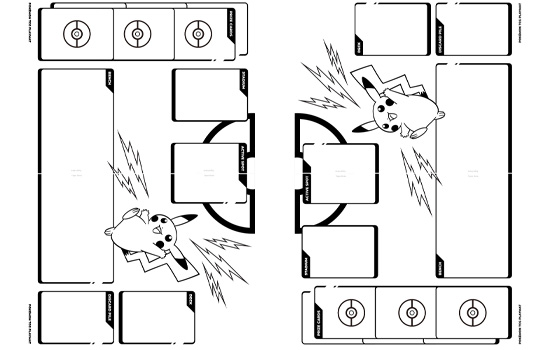
The play area is simply referred to as ‘the field’ and often players will have a playmat which shows where to place items. You will have a ‘bench’ where up to five non-active Pokémon cards can be placed so that they can be swapped in and out of battle. This will be directly in front of the player. Above this will be the active spot, where the active Pokémon is placed and to it’s right will be your deck of cards. Below the deck will be your discard pile, and on the left of the field will be where you keep prize cards, these are used to keep score.
Draw seven cards into your hand and place a basic Pokémon face down in the active spot, and up to 5 others onto your bench face down. If you don’t have any basic Pokémon in your hand, you can ‘mulligan’. You do this by showing your opponent your hand to prove you have no basic Pokémon and then shuffle the cards back into the deck before drawing another seven. Each time you do this, your opponent gets to draw an extra card.
Flip a coin to see who will go first and then you are ready to begin the game!
Pokémon are the creatures that you do battle with, creatures with elemental related abilities, strengths and weaknesses. These are known as ‘types’ and are Grass, Fire, Water, Lightning, Fighting, Psychic, Colourless, Darkness, Metal, Dragon and Fairy. You can use their special abilities, and in some cases evolve them into stronger versions.
Trainer Cards provide various benefits to players and can affect either one or both players during the battle.
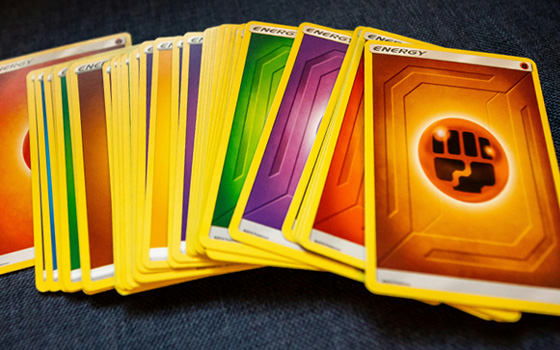
These cards provide the energy to withdraw Pokémon from battle, activate special abilities, and use their attacks.
Pokémon cards may seem complex to the untrained eye but once you know what you’re looking at it becomes a breeze.
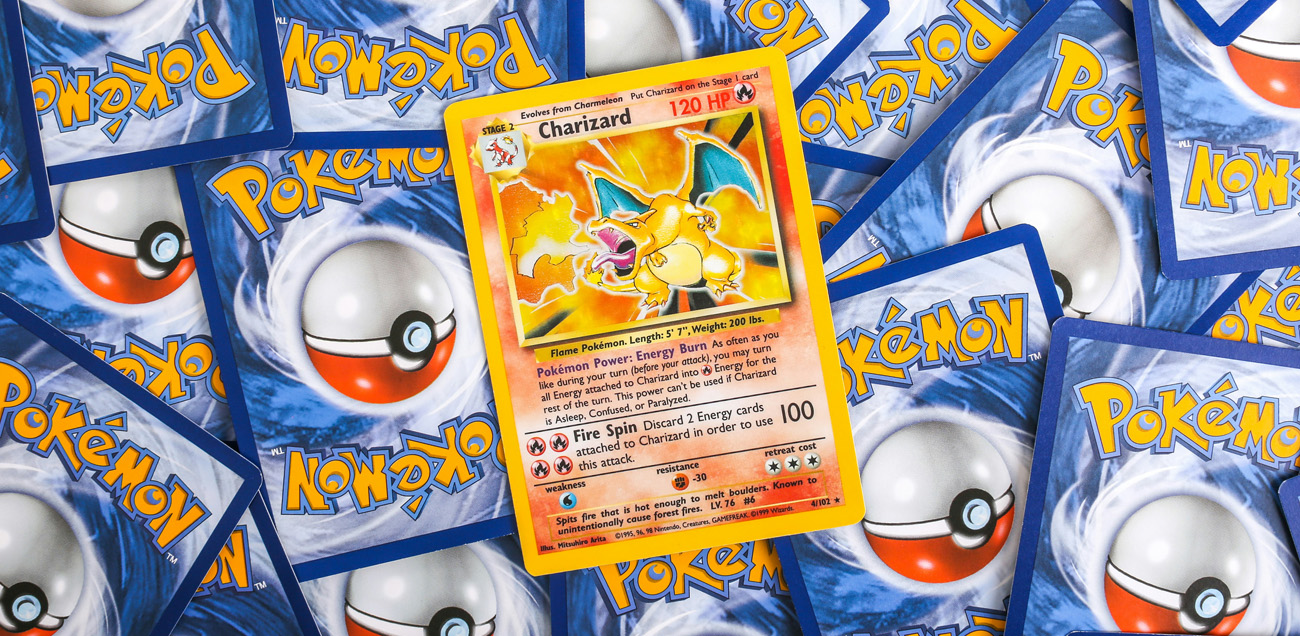
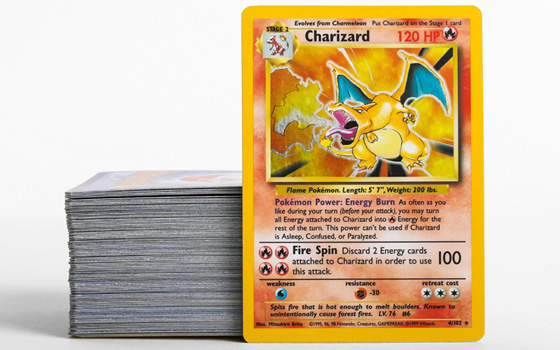
With character cards, in the top left-hand corner you can see the evolution stage of Pokémon. If it is a basic Pokémon there will be no symbol here, but if the creature has evolved there will be a symbol representing what it has evolved from. Next to this will be the card name, so you know exactly which Pokémon you are playing.
On the top right-hand side of the card, you will see the Pokémon’s hit points (HP) which shows how much damage it can withstand, and next to this will be a symbol representing its type.
Below these will be the card’s artwork, a beautifully rendered image of the Pokémon in question, giving some flair and character to the many creatures available to battle. Underneath this will be the character’s attacks with the attack cost to their left, showing what energy cards need to be attached to the Pokémon to complete the attack, and attack damage to their right, showing how many HP it will take off the opposing Pokémon. There may also be some further attack text that explains a further effect or ability of the attack.
At the bottom of the card there is more, with weakness and resistance on the left-hand side. These show if a Pokémon is more resistant or more vulnerable to attacks of a certain type meaning that they may take more or less damage from an attack. On the right will be a retreat cost, showing how much energy is needed to bring the Pokémon back to your bench.
Trainer cards simply have a name, image and then text explaining what they do, so you simply have to follow the instructions on the card to understand their use, and energy cards state what type of energy they are and have a corresponding image.
After your first turn, you draw one card at the start of each turn and place it into your hand. There is no hand limit so, although you may start out with seven, you keep all cards not used in between turns.
Once you have decided who goes first, players must flip over their active Pokémon and their bench so that your opponent can see what Pokémon you have, and vice versa. The prize cards remain face down until you defeat an opposing Pokémon by knocking it out. Once you have knocked out a Pokémon, take one of these prize cards and place it into your hand, if there are no prize cards left for you to pick up, you have won the game.
During your turn, you can play basic Pokémon from your hand to your bench, providing that there is still space on your bench. You do not have to play all of them but be aware that if you cannot play anymore Pokémon from your bench if your active Pokémon is knocked out, you lose the game. You also cannot play more Pokémon from your hand to the bench if it is already full (five Pokémon). You must wait until a spot opens through a Pokémon being knocked out, or by using a card effect (like switching) to move a benched Pokémon into the active spot, freeing up space. Some cards effects may expand your bench size, but the standard limit is five.
You can attach energy to the Pokémon in play but are only able to do so once in each turn. That energy stays with that Pokémon and fuels its attacks but is discarded if the Pokémon is knocked out or retreated to the bench.
If you no longer want the active Pokémon to battle, you can switch it onto your bench for another Pokémon already there but can only switch once per turn. Each Pokémon will have a retreat cost, and the active Pokémon will have to have enough energy attached to it, that is then discarded to return it to the bench. The switch happens at the same time so you can still switch your cards, even if your bench is full.
Some Pokémon have evolutions, which mean you can use evolve them to have greater power once a turn, except your starting turn. You can’t evolve a Pokémon on the turn it becomes active, and it keeps all energy and damage counters already on it when it does evolve.
These evolution cards are played from your hand and can only be applied to the corresponding basic Pokémon. Some Pokémon have a Stage 1 evolution and then a handful of these Stage 1 evolutions have a Stage 2 evolution. Evolving a Pokémon counts as playing it so it can only be evolved once each turn.
Trainer cards are simple to play because you just follow all of the instructions on the individual card. You play them from your hand and once they are resolved they go into your discard pile. There are different types of trainer cards such as items and supporter cards. A player can play as many item cards as they like but only one supporter card each turn.
If your active Pokémon has the right energy attached to it, it can use one of its attacks. Put the amount of damage counters that the attack produces on the opposing Pokémon and once the damage on it matches its HP, that Pokémon is knocked out and goes into the discard pile.
Some attacks don’t do damage but hinder the opposing Pokémon in other ways. These are called ‘special conditions’ and include…
Asleep: If a Pokémon is asleep, it is turned anticlockwise and cannot attack or retreat. Between each player’s turn (known as the Pokémon Checkup), flip a coin. If heads, the Pokémon recovers and if tails, the Pokémon remains asleep.
Burned: If a Pokémon is burned, put a burn marker on it. During Pokémon Checkup put two damage counters on the Pokémon and then flip a coin. If heads, the Pokémon recovers and you can remove the burn marker. A Pokémon cannot have two burn markers so if it gets burned again, the existing burn marker remains in place.
Confused: If a Pokémon is confused, turn the card upside down (with the top facing you) to signal its confusion. Flip a coin before it attacks and if heads, the attack works as usual but if tails, the Pokémon takes 3 damage itself.
Paralyzed: If a Pokémon is paralyzed, it is turned clockwise and cannot attack or retreat. After its owner’s next turn, it recovers during the Pokémon Checkup and can be turned right side up.
Poisoned: If a Pokémon is poisoned, put a poison marker on it. During Pokémon checkup put a damage counter on the Pokémon. A Pokémon cannot have two poison markers so if it poisoned again, the existing poison marker remains in place.
When a Pokémon evolves or moves to the bench, it recovers from all of its special conditions. Special conditions that require the card to be rotated (asleep, paralyzed, confused) cannot be used at the same time, so the last special condition to be placed on the Pokémon is the one that remains in place, superseding others. However, special conditions that use markers can be stacked so an unfortunate Pokémon can be burned and poisoned at the same time, as well as suffering from a special condition that rotates it too!
Winning takes defeating six of your opponent’s Pokémon so prioritise cards that strengthen your Pokémon and be aware of their characters’ strengths and weaknesses.
Build a deck with a consistent strategy and that helps you control the game with a good mix of character and trainer cards. Be careful to read your opponent’s cards carefully so you don’t miss any details. Understand popular tactics and deck builds to strategise against them, or to be able to adapt to similar, and don’t consider your discard pile as inaccessible. Find cards that can make your discard pile part of your game and use everything you can.
In short, Pokémon TCG is a contest of power and skill, with an element of luck involved. A Fast and fun combat, it’s a great way to collect cards and test your mental dexterity and ability to adapt against friends. Find the latest Pokémon TCG release information and where you can get them in-store them with our dedicated Pokémon launch page.
If Pokémon doesn’t seem quite your thing, we have plenty of other awesome trading cards to check out including Magic: The Gathering, Topps Premier League and Yu-Gi-Oh!
Read our disclaimers.