 Free Click & Collect within 30 minutes
 Free delivery on orders over £39.99
 Free Next Day Delivery on orders over £75
 Gift Cards available

How Video Games Can Help Your Child’s Development
5 min read
Last Modified 2 June 2026 First Added 2 June 2026
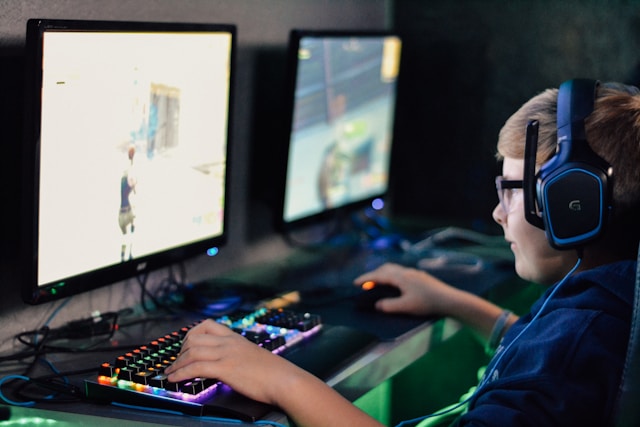
Parents and guardians can often be cautious of videogames because of the amount of screentime they can involve and concerns around online safety (which we’ve written a blog about here to help you navigate online gaming).
But gaming also has many positives and, if monitored properly, can help with child development for a long-lasting impact that can be built on over a lifetime. Here, we look it how they can aid in child development.

Videogames can impact behaviours and cognitive developments in different ways. If used correctly, they can stimulate minds and form the basis for positive growth, with educational and social benefits such as:
Development of spatial awareness – Different genres of games will have different actions in them depending on what is required of the player, but the understanding of spatial awareness comes from three-dimensional spaces and movement, which the gamer controls. This lends itself to an increased understanding of hand-eye coordination as you learn to understand the spaces you are placed in.
Memory and problem-solving skills – Games with puzzles and strategy can help to develop logical skills for problem solving. By overcoming obstacles and having to follow a logic train, children can learn to adapt to situations, thinking critically when needed. This can be achieved through playful learning, where educational games manage to gamify real world skills.
Building emotional connections – An online gaming space can act as a digital playground, where friends meet and memorable moments are made. Of course, virtual activity should be balanced with physical activities and real-world socialising but building bonds over a shared interest can help develop stronger community ties.
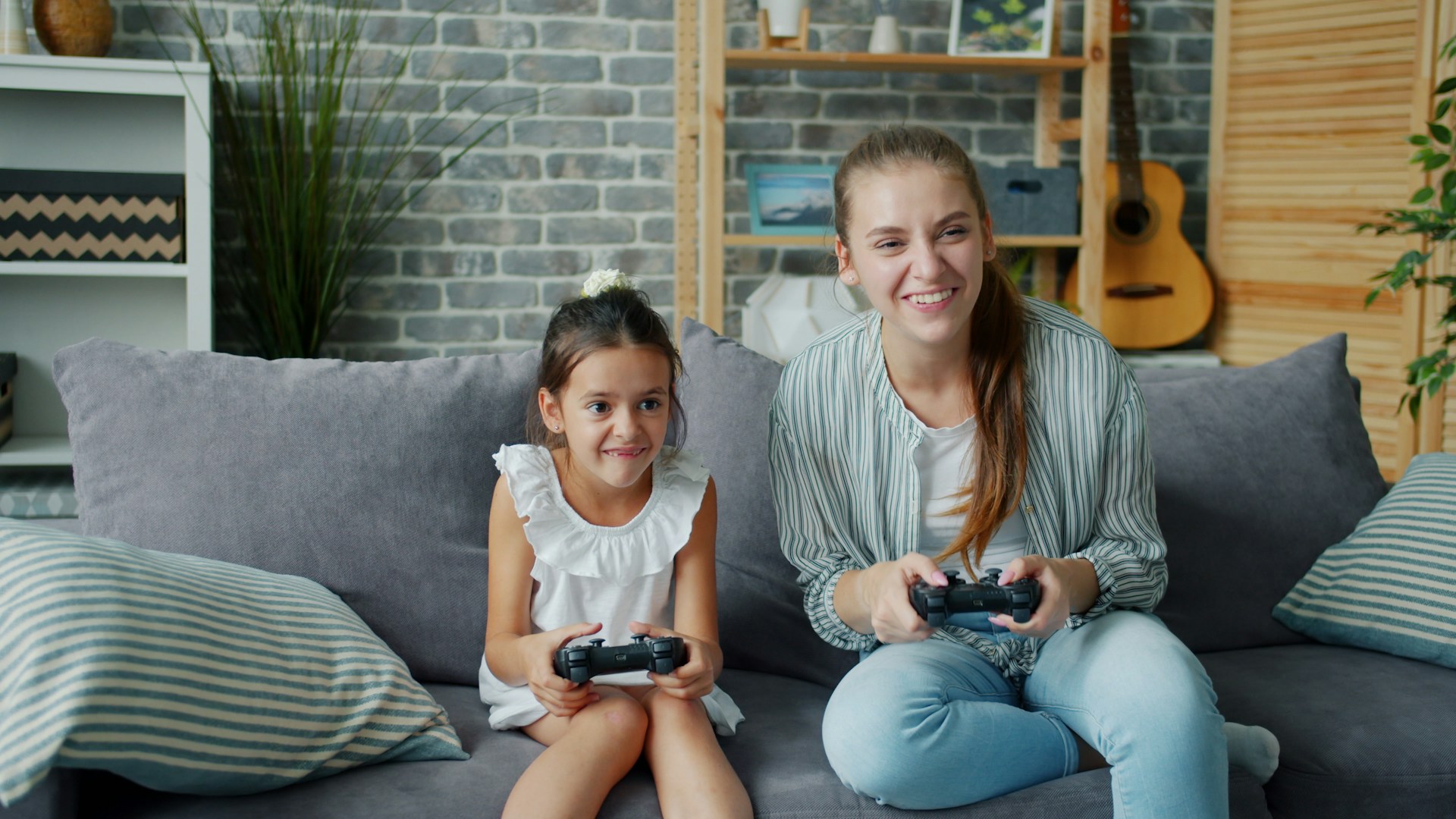
Working together – Cooperative gaming can encourage teamwork and collaboration by helping understand and utilise others’ skillsets whilst they complement your own. Games that specifically encourage you to work together (like Split Fiction) need patience and understanding, as well as a collaborative response to challenges.
Emotional Resilience and Regulation – Facing defeat can be frustrating but by repeating the same task until you succeed, the recognition of persistence comes with the gratification of success after struggle. Controlling emotions and remaining calm is key to this and some games, such as those in the Sonic the Hedgehog series, can offer challenges that can be overcome by learning patterns at a fast pace, with trial and error a big part of their mechanics.

Videogames can significantly impact behaviour of gamers, especially younger ones more susceptible to changes in characteristics, in many ways. There are positive and negative outcomes and so making sure that the right games are played and healthy approaches to gaming are taken are key to making sure that the beneficial outcomes are the ones that come to the fore.
Prolonged exposure to violent videogames can lead to desensitisation to aggressive behaviours that can lead to outbursts and a not knowing how to control their temper. This is why making sure age-appropriate content is available is important.
Likewise, fast paced content can lead to impulsivity, hyperactivity and lack of concentration that can then lead to irritability. With games that offer instant gratification and rapid rewards, the instant dopamine delivery can then lead to frustration when withdrawn so ensuring games that provide delayed gratification or reward for serious effort can help with building patience rather than deteriorating it.
There are many positives too, with prosocial behaviours coming from interaction with others. This can be used to encourage empathy and teamwork as players work together to overcome challenges, but also just have a virtual meeting point to gather at and discuss their days whilst playing.
This also has the added benefit of stress relief, spending time with friends when it’s not physically possible to do so and serving as a healthy outlet (when balanced correctly) to decompress and unwind.
Like any tool, videogames are neither inherently good nor bad, but rather, it comes down to how you use them. Videogames require time with a screen and can jump from action to action, encouraging fast cuts to appeal to shorter attention spans, and lack challenges so that it is more experiential than a piece of entertainment that requires work and patience.
However, puzzle games or platformers that offer up challenges and problem solving, with genuine learning curves and a need for thoughtful consideration, can help build patience through trial and error and learning patterns.
Too much screentime can affect sleep patterns and attention spans too, leading to other health conditions, so making sure there is a definite cut off point from playing videogames, and balancing it with other educational, social, and physical activities is important for all ages.
There can also be a concern over the content of videogames, but PEGI ratings are there to help parents and guardians fully grasp what a game’s content is like, and you can read more about these in our blog here.
Read our disclaimers.