 Free Click & Collect within 30 minutes
 Free delivery on orders over £39.99
 Free Next Day Delivery on orders over £75
 Gift Cards available

A Toy Story Saga: How Woody, Buzz and the Gang Stole Our Hearts
10 min read
Last Modified 3 August 2026 First Added 27 March 2026
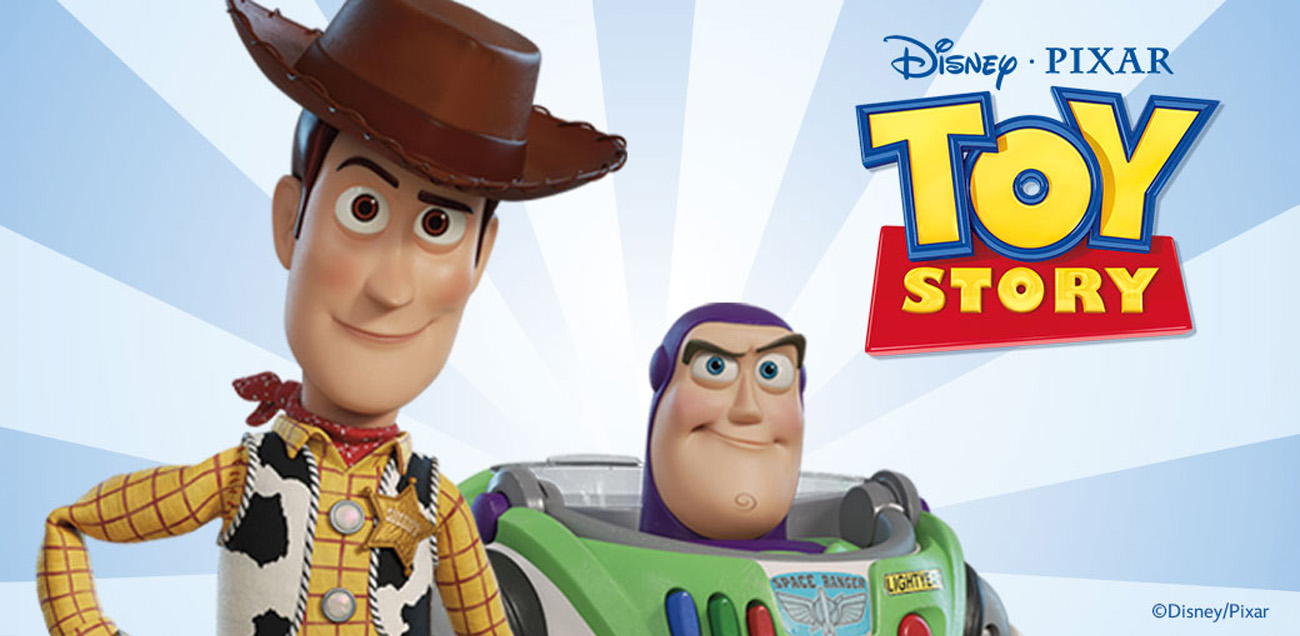
Toy Story has long been championed as of one of the best animated film series around. Since 1995 it has been pushing the boundaries of animation and storytelling in beautifully crafted cinema that pulls at the heart strings of adults and children alike while conveying serious messages through wonderful and hilarious characters.
With five entries in the series, many would expect diminishing returns from such a long running franchise, but each film builds on the last and holds onto the core themes and elaborates a little further each time. Here we look at why they continue to go from strength to strength and how they’ve touched generations through emotive and intelligent chronicles.
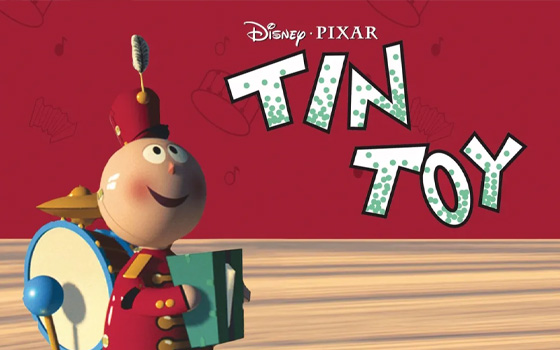
Pixar started out as a small independent film company working with the new technology of digital animation. In 1988 they produced the short film Tin Toy, a 5-minute short following Tinny, a one-man band toy trying to escape the clutches of a mischievous baby.
Tin Toy proved groundbreaking in its use of technology and went on to become the first animated film made entirely using 3D computer-generated imagery to win an Oscar. As such, it established computer animation as a legitimate artistic medium and gained the attention of Disney, who then sealed an agreement to create Toy Story with Pixar.
Following Tin Toy’s success, Disney approached Pixar to produce a feature length digitally animated film, something that hadn’t been done before, from a small toy’s perspective. Disney wanted something “edgier” in tone than Pixar’s initial short film and so production was difficult with several rewritten story reels and scripts to try and achieve the right feeling while also adhering to financial constraints. Pixar strove to create something around the theme of, “toys deeply want children to play with them, and … this desire drives their hopes, fears, and actions.” Eventually, Toy Story was released in 1995, and the world was enthralled by the adventures of these anthropomorphic dolls.
Following the toys of a young boy called Andy, these sentient playthings pretend to be inanimate when humans are around but as Andy’s sixth birthday nears, they fear they may be replaced by something newer and more exciting, made worse by the fact they will soon be moving house and need to be prepared to be packed away.
Woody is a drawstring cowboy who is Andy’s favourite toy and the de-facto leader of the toys of Andy’s room, easing their fears and reassuring them that they’ll always have a place in Andy’s heart. However, things go South for Woody when Andy receives a Buzz Lightyear action figure that supersedes Andy’s affection for him, making him incredibly jealous.
Buzz is a space ranger toy with lots of cool gadgets and accessories, but he also suffers from the delusion that he is on a real space mission and not just a plaything. This causes many hilarious situations as Woody and he constantly clash, eventually leading to them fighting and becoming lost while on a car trip with Andy.
After an exciting and exceptional jaunt through arcades and pizza places, the pair learn to work together to get almost home but only end up at the house next door, occupied by the sadistic Sid who mutilates toys and reassembles them with different body parts, or gives them to his bull terrier to chew on.
After navigating the pitfalls of Sid’s house, and teaching him a lesson in the process, Buzz and Woddy find themselves out of time to make it onto the moving van and so a brilliant parody of action film car chases takes place as the pair call on the services of a remote control car to get them back to where they rightfully belong.
Ultimately a story of friendship and belonging, it runs through so many concepts, including purpose and adaptability, that it strikes a chord with almost all who watch it in one way or another.
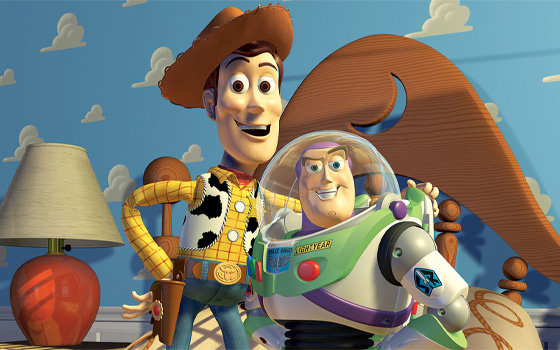
The first sequel arrived in 1999 with Woody and Buzz having buried the hatchet and now jointly leading the rest of Andy’s toys. However, when Andy accidentally rips one of Woody’s arms, he finds himself on a shelf waiting for repair and feeling as if he may soon be forgotten or thrown away.
During a yard sale, a greedy toy collector discovers Woody and steals him away where Woody is introduced to Jessie the cowgirl, Bullseye the horse, and Pete the prospector who were all toys made to promote a 1950s western television series alongside Woody. The collector intends to sell the whole set as TV memorabilia to a toy museum in Japan. Now repaired and finding kinship with the other toys in his series, Woody starts to wonder if this is not a better existence than waiting for Andy to grow too old to play with him. Meanwhile, Buzz and the others launch a rescue mission to return Woody home.
After an eventful detour through a toy store, Buzz and co. get to Woody but he initially refuses to go with them, only reconsidering when he realises his purpose is to be played with and provide joy. He invites Jessie, Bullseye, and Pete to come back to Andy’s house with him and while Jessie and Bullseye agree, Pete forcefully blocks them from leaving, insisting it would be better to be in the museum.
Discovering Pete’s dastardly plan, the others once again launch a rescue mission, this time getting Woody, Jessie and Bullseye out of the packaging they are trapped in before the plane to Tokyo takes off.
Further building on the themes of purpose and friendship of the first film and introducing a colourful array of new characters alongside the established favourites made this another massive win for Pixar.
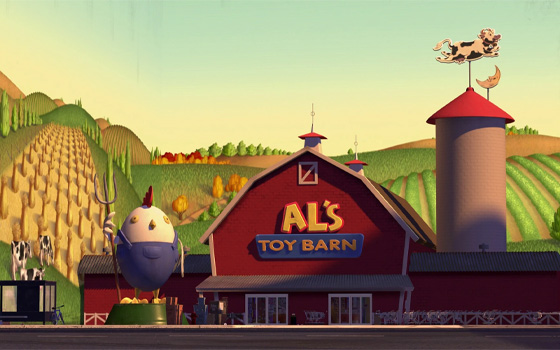
After two massive hits with the Toy Story films, and the unexpected success of A Bug’s Life in 1998, Pixar went on an epic running of making some of the most successful and beloved animated films of a generation, producing Monsters Inc., Finding Nemo, and The Incredibles.
Pixar worked alongside Disney all this time to have access to their resources and distribution network but in 2006, Disney bought them outright welcoming them into the family of animation’s most loved company worldwide.
The third instalment of the Toy Story saga presents us with the inevitable, that Andy has grown out of his toys. Now preparing to go off to college, Andy has begun packing the toys away and they’ve accepted their fate of being stored in the attic.
However, Andy’s mother accidentally donates the bag of toys to the Sunnyside Daycare where they find themselves in a setting where they can constantly be played with. This starts out seemingly idyllic, but it transpires that the villainous Lotso Huggin Bear rules the roost with an iron paw and has them sent to the toddler daycare where the toys are not age appropriate and are treated roughly. Woody finds some solace in being picked up by Bonnie, a young girl who takes him home to play with her other toys and Woody discovers the joy of being played with again, but he returns to Sunnyside to reunite with his friends.
Around the same time, the other toys realise that Andy never intended to get rid of them and so they hatch an escape plan but are thwarted by Lotso and, after a tussle, they all end up in the bin and find themselves being taken to the dump to be destroyed.
In an epic finale, the toys find themselves on a conveyor belt heading towards an incinerator before a twist of fate allows them to get out of the situation (thanks to a fabulous call back to a hilarious moment in the first film where Buzz meets a collection of three-eyed toy Aliens) and they ride a bin lorry back to Andy’s house.
Woody writes a note to Andy, in the guise of his mother, and Andy ends up donating his toys to Bonnie, and as Andy plays with Bonnie, and his toys one last time, it brings his story to a close in a tear-jerking moment that speaks to parents and children alike, and as the original audience of the first film have grown, it felt like a fitting tribute to a generation of fans who grew up with these toys as their friends.
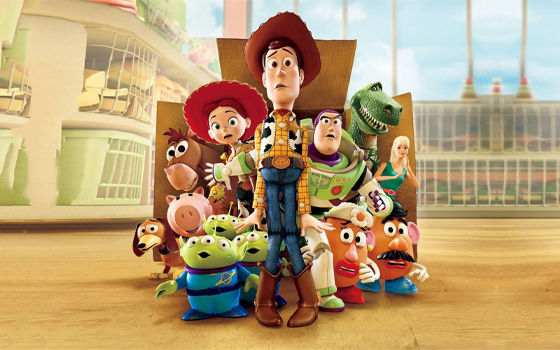
Opening with a flashback of Woody’s romantic interest Bo Peep being donated to another child while they were still at Andy’s, Woody now finds himself also donated to another child, Bonnie, who we met in the last picture.
However, Woody is no longer the leader as Bonnie already has more established toys, and he is rarely played with as Bonnie has other interests. Woody accepts this but still sees it as his duty to support Bonnie, so when he discovers she’s struggling to integrate at kindergarten, he stows away in her backpack to be there for her in tough moments. From here, he witnesses her doing arts and crafts, where she creates Forky from a plastic fork.
Forky rapidly becomes Bonnie’s new favourite toy but suffers the existential crisis of seeing himself as disposable rubbish and so constantly seeks to be thrown away. Woody begins the undertaking of trying to get Forky to understand his new purpose but when Forky jumps out of the window of the family RV when on a road trip, Woody goes after him to make sure he’s not lost to Bonnie.
During this escapade, Woody discovers a group of ‘lost toys’ that hang around playgrounds to be found and played with by children passing by, and they make the most of a travelling carnival that attracts lots of children but also has prize toys to be won too. Amongst these ‘lost toys’ Woody once again encounters Bo Peep who convinces him that her nomadic lifestyle has its advantages.
Getting Forky back to the RV, Woody decides to stay behind and help Bo Peep in assisting other abandoned toys find owners. In an emotional farewell, the gang say their goodbyes and Bonnie creates a companion for Forky with a plastic knife which helps ease his transition into life as a toy.
The dissolution of the group and the theme of acceptance over change chimed with audiences and made for another much-loved addition to what was already seen as a perfect trilogy.
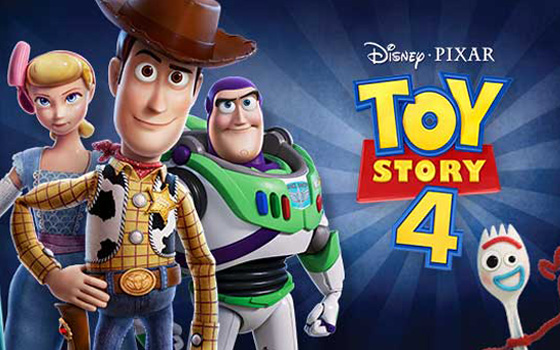
With Woody now in the Wilderness, Jessie has become the leader of Bonnie’s toys with Buzz as her second in command. However, when Bonnie is gifted a Lilypad, a talking frog-like tablet, the toys become concerned with how much screen time she is having and how little she plays with her physical toys.
Putting a message out to Woody, he returns to help them in their quest to understand how to get Bonnie to play more as the film raises interesting questions of the growing influence of tech on children and what constitutes a toy.
With the advances of digital animation with each film, the series has always been at the forefront of what animation can achieve, from fully animated characters through to realistic reflections and world building, the beauty of the world of the toys has always been reflected with the utmost care. Coupled with stunningly in-depth stories, it’s little wonder that they’ve become worldwide phenomena that people of all ages love.
Discover our Toy Story and Disney ranges and create your own adventures with Woody, Buzz and the whole gang.
Read our disclaimers.