 Free Click & Collect within 30 minutes
 Free delivery on orders over £39.99
 Free Next Day Delivery on orders over £75
 Gift Cards available

How to Play Yu-Gi-Oh! TCG
10 min read
Last Modified 23 June 2026 First Added 5 June 2026
Yu-Gi-Oh! Trading card game (TCG) is one of the biggest in the world with millions of active players globally. A long running media franchise with manga comic books and anime TV shows to its name too, it’s little wonder it has such a passionate following.
In the game you duel another player by summoning Monsters, combining them with other cards to increase their power, using trap cards to hinder each other’s summons, and lowering your opponents Life Points (LP) to 0. Collect and trade cards to build your deck and use different strategies to overcome challengers.
If you’re new to game, we walk you through some basics and help you find the heart of the cards to help send your opponents to the shadow realm.
The game mat is how you organise your cards during a duel, with different cards placed in different zones with a total of seven zones on a mat and each duellist will have one of their own. When the mats are combined, this is referred to as ‘the field’ as a whole, and the cards you control are the ones on your side of the field. You don’t need a literal game yet, just to remember how and where to place your cards (although a game mat can be useful for this).
Zone 1 is the ‘Main Monster Zone’. Every time you play a monster this is where they will go. Central, in front of you, there is a space above it and space below it so that it is bang in the middle of your game mat. You can have up to five monster cards here in either a face up attack position, face up defence position or an upright attack position. The cards are placed upright for attack position and sideways for a defensive position.
Zone 2 is the ‘Spell & Trap Zone’. It is just below the Main Monster Zone and, in the same manner, you can place up to five cards here, face up to activate them otherwise face down. Pendulum Monster cards can be activated in the left most and rightmost zones as Spells, which then means the zone also becomes a Pendulum Zone as long as there is a Pendulum Monster card there.
Zone 3 is ‘The Graveyard’ and is placed to the right of the Main Monster Zone. If a Monster card gets destroyed this is where it ends up, face-up so both players can see the contents of one another’s Graveyards. In card text a Graveyard is shortened to “GY” and the order can be important so it should not be shuffled or altered unless an action on a card says so.
Zone 4 is your deck and is below the GY and to the right of the Spell & Trap Zone. Kept face down in this space, this is where you draw your cards from to add to your hand. If an effect or speel requires you to look through your deck, complete the action then shuffle the deck and replace it here, face down again.
To the left of the Main Monster Zone is the “Field Zone” in Zone 5, where special spell cards called “Field Spell” cards are played. Each player may have one of these cards in play and do not count towards your five cards in your Spell & Trap Zone. If you wish to play another Field Spell whilst one is in play, that first one must go to the GY.
Below this is Zone 6 which is where your Extra Deck sits. It will also be face down, like your main deck, but you can look at the cards in your extra deck and summon monsters from here using special methods. Pendulum Monsters that would be sent from the field to the GY are placed face up here.
Zone 7 is the final zone and is your Extra Monster Zone. Sitting above the rest of the field, slightly to the left or right, this is where the aforementioned monsters from your Extra Deck are summoned to and do not contribute to the five monster limit of your Main Monster Zone.
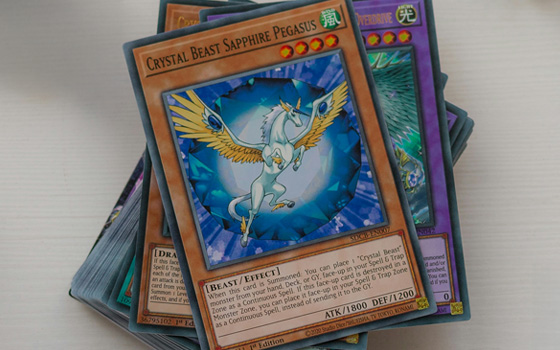
Your main deck should be between 40 to 60 cards in size, with a side deck being up to 15 cards (although a side deck is not required). Your deck should be well balanced with a consistent strategy through it, with a balance of approximately half monsters and then the other half split between spell and trap cards. You are allowed up to three of the same cards in your deck but over time, some cards have been restricted or forbidden in competitive play so cannot be used or only used once or twice.
Beginners can purchase pre-built starter decks and then start to swap out cards as they develop their own playing style or can find deck lists online to build along with. Once you’re confident enough to come up with your own strategies, you can start to develop unique decks for your own taste and play style, with the collection you have.
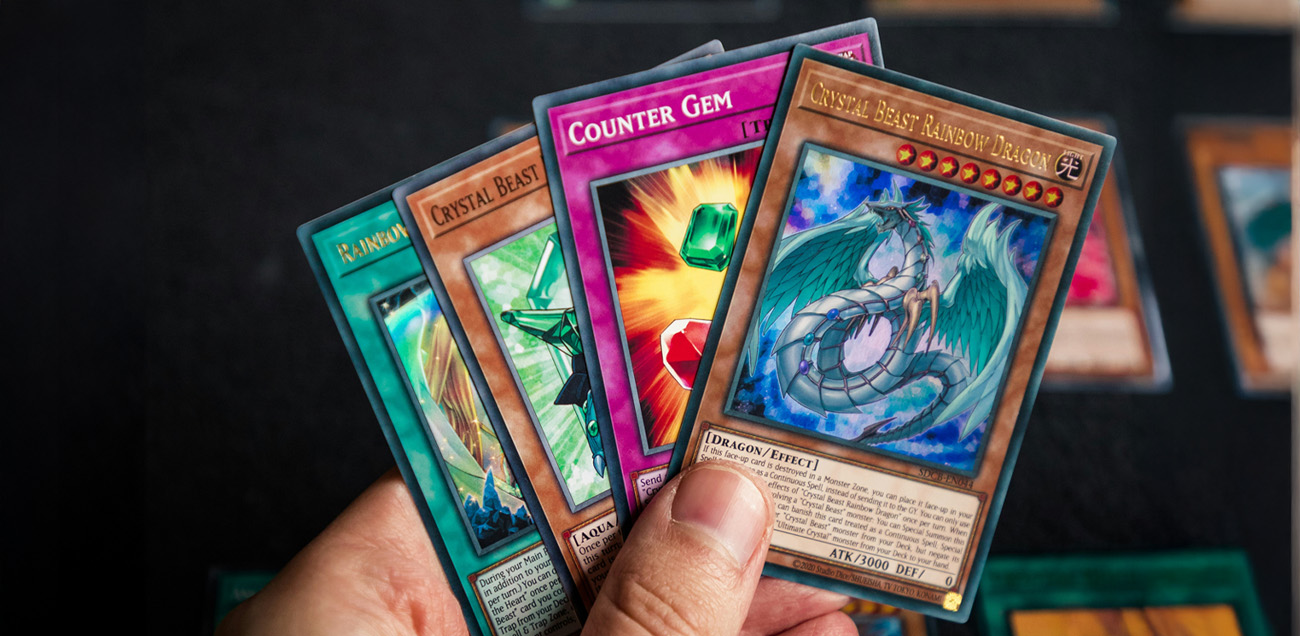
Understanding how a card functions is the first step to utilising it to its full capability and using it to help you towards winning. Across the top of the card will be the card’s name so you know what card you’re playing. Directly next to this is a symbol that is its attribute. Every monster has an attribute, and this is important for card effects with some monsters benefiting from attributes or weak to others. If it is a spell card, this is the type instead. Directly below this, to the right of the card is the monster’s level but spell and trap cards will have an icon. Icons signal the type of properties spells and traps have. Below this will then be the card art, the illustration that accompanies the card and is a visual representation of what it is. These will then have a card number at the bottom righthand corner or the image, and a monster’s type is then listed below this. Further below that a cards description shows a spell or trap’s activation abilities or a monster’s special abilities. A monster will then have attack points/defence points in the bottom right corner.
Monsters are used to battle and defeat your opponents and are the foundation of any duel. With various types of monster cards, they can have different effects or link to one another. With different special abilities, you can use these and combinations of other cards to swing the game in your favour and deal damage to an opponent’s monsters and LP.
Spell cards can help you out with an array of different powerful effects. Usually only able to be activated during your main phase they can often strengthen monsters or destroy other cards so it is worth saving them in your hand until you can get the best result out of them
Just like spells, traps can help you out with different effects, however, you can cast a trap during an opponent’s turn to hinder them or disrupt their attack. Some may require them to complete certain actions first though but are a great form of surprise if you can unleash them.
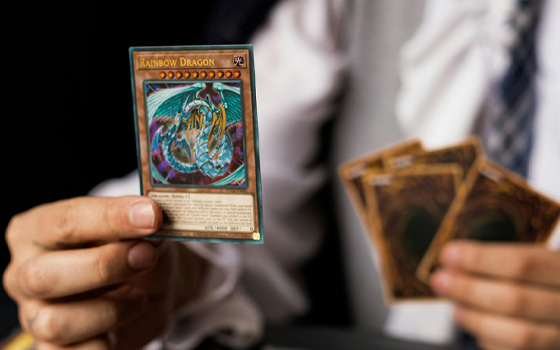
Played in sets of three games, each game is called a duel and the first player to two duel wins is the overall victor. Each player begins a duel with 8,000 LP and you win a duel by reducing your opponent’s LP to 0, if they’re unable to draw a card, or if there is a special effect that states you win the duel. It is possible that both players reach 0 LP at the same time, in which case the duel is declared a draw.
Play rock, paper, scissors or flip a coin to go first and then shuffle your decks before beginning, allowing your opponent to cut your deck to confirm it has been shuffled. A duel progresses through turns and a player’s turn goes through a draw phase, standby phase, main phase 1, battlew phase, main phase 2, and then end phase.
The first phase is the draw phase, and a player will draw one card from the top of their deck, after which trap cards or quick-play spells can be activated. The player who goes first cannot draw on their first turn.
The standby phase then allows cards which have effects that activate during it to be completed. This may happen automatically or need a cost to be paid but once these are resolved, you can progress to the main phase.
Main phases allow you to summon, set and change the battle position of a monster, activate a card’s effect, and set spells or traps. These can happen in any order you want. Your second main phase allows you to do the same but if a card is limited to the amount of actions you can do in a turn, these actions can’t be repeated if completed in the first main phase.
The Battle phase has a few steps where a player must first announce that they are entering the battle phase. If you are the first player, you cannot enter a battle phase on your first turn. You do not have to battle if you do not wish
The next step id to select which monster you wish to attack with and then declare the attack, if the opponent has no monsters to defend with then this attack is directly on the player’s LP. If they do, then choose the monster you wish to do battle with instead.
The damage step is where players calculate the damage dealt and then, if more monsters are on the field, repeat the battle step and subsequent damage steps until al battles are resolved.
After you’ve resolved the battles, announce you are ending your battle phase. After the following main phase, it is then the end phase where you resolve any outstanding effects (usually saying “during the end phase”). If you have over six cards in your hand, discard back down to six and then pass the turn to your opponent.
Chains are what happen when multiple spells have been played and multiple effects need to be resolved. If a card’s effect is activated, an opponent always has the right to respond immediately, to which the initial player can then respond, this creates a chain of effects. If an opponent doesn’t respond, chains can still be created by activating more effects. You then resolve the order of each effect in reverse order, from the last one activated.
With all the basics in place you can now set out on your Yu-Gi-Oh! Journey. Find decks and booster packs to build your collection at The Entertainer. Check in-store for the latest releases and find the nearest one to you using our store finder.
Read our disclaimers.