 Free Click & Collect within 30 minutes
 Free delivery on orders over £39.99
 Free Next Day Delivery on orders over £75
 Gift Cards available

What is a Furby Toy? | The Complete Guide
7 min read
Last Modified 10 April 2026 First Added 10 April 2026
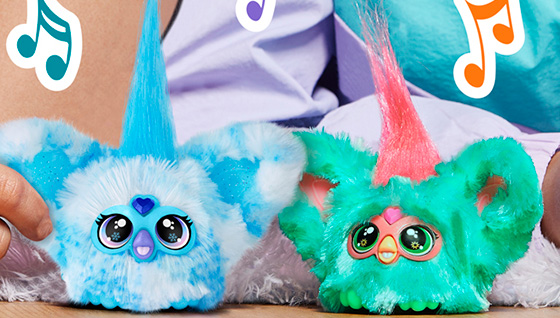
Chattering creatures of an incomprehensible language, these strangely shaped fur balls have been delighting (and confounding) families since 1998 and continue to be a popular toy. Part pet, part robot, part…goodness knows what, Furbys ruled the roost when it came to toys in the noughties, finding their way into the hearts and households of the nation.
Known for waking up grumpy (we can empathise), the dolls then demand attention (again, we know how they feel) before learning how to speak. Their distinctive ‘Furbish’ language burbles down hallways and in bedrooms bringing interactive fun wherever they go, and after over two decades of capturing imaginations, we dive into what they actually are.
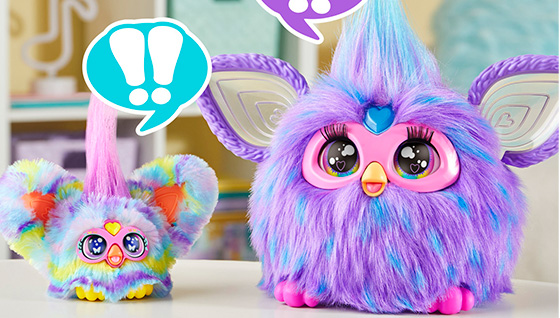
Furby toys have a distinctive look that makes them instantly recognisable on the shelves. Owl like in appearance; they are wide eyed with massive ears and a rounded beak to really hammer home their cutesy vibe. With no discernible limbs, they have no specific species but were designed to evoke an animal like appearance with features from birds and hamsters and a soft, furry covering to pet and hug. Unique yet approachable, their design makes them strangely familiar.
Responding to touch, they react with joy when petted or tickled, whilst also seemingly knowing when they’ve been picked up or turned upside down. This realism in reaction, along with being able to be ‘fed’ by a finger in the mouth and the fact they react to other nearby Furbys, make them a fascinating toy.
The language journey they go on brings a sense of discovery to them as they start out speaking ‘Furbish’ before appearing to learn English as you speak to them more often. This contributes to a feeling that you’re nurturing your Furby and really helping it grow.
The fact that they also seem to develop their own personalities, depending on how you interact with them, also helped build a lasting bond with them and further helped propel them into the icon they are today. As such, your Furby can become sweet or mischievous, be calm or sassy, and develop preferences.
The clever use of technology is what elevated the Furby into the pantheon of legendary toys. Sensors for everything make it reactive and responsive, with tilt sensors to monitor its position and touch sensors to know when it’s being petted, it then uses its internal motor to move and react to your movements. Sound sensors mean it gives the illusion of listening to you and light sensors make sure it reacts to day and night, so it sleeps when you do.
The illusion of learning words comes from pre-programmed vocabulary that unlocks over time so that interaction with the toy triggers that progression. This makes the whole experience feel like real learning, providing a sense of satisfaction as you watch your Furby ‘learn’ and grow.
Combine this with its ability to mimic feelings with LCD eyes showing ‘emotions’, through displayed love hearts or stars, mechanical eyelids and ears for facial expressions, and beak movement that is synchronised with their speech patterns, and it’s like a living pet that reacts and shows you companionship.
Seemingly alive, the pet experience of a Furby holds a certain level of realism because of the nurturing opportunities and its lifelike emotional responses. Influenced by how you treat it, it creates an emotional connection and because it interacts with other Furbys, it has a social element that can create a shared experience with other Furby owners.
The mystery factor of discovering new responses and hidden commands gives the toy long lasting replay value because of the way it evolves with the user over time. Figuring out its preferences and engaging with these really forms intense attachment, making them easy to love.
Parents can have a more complex relationship with Furbys than children as bringing one into the home can offer both pros and cons. There are the immediately obvious advantages of having a fun toy that encourages nurturing behaviour through fascinating technology that offers genuine entertainment, but some have struggled with what these features can mean.
The toy is never ‘off’ completely, so that it can always react to situational changes and this has led to startling moments of the Furby ‘waking up’ at unreasonable hours as you try to sneak about. Hearing Furbish in an otherwise silent house, whilst everyone else is asleep, can be quite the eerie experience as can seeing those big eyes open up seemingly unprompted.
Furbys also don’t use AI so they’re not learning from your actions so much as using pre-determined responses through clever programming, so eventually they will repeat themselves and those personality changes you’re eager to see will take time. As such, the repetition can become a little wearing, and batteries can die at the most inconvenient of moments.
There is a happy middle-ground though, with the trick coming from mastering the sleep mode. Use it effectively and put your Furby in a cupboard or dark, out of the way, place when not in use, and you’ll find peace from its talk. It’s good to manage expectations for younger children too, explaining that its behaviour may not progress as rapidly as they possibly had hoped so they must be patient with it to see change.
If you do take the plunge and pick up a Furby, there are some practical care tips that will help you maintain your new friend. The battery lifespan can vary dramatically depending on your generation so make sure you’ve always got some spares available as it’s advisable to change them over before complete shut down so as not to lose any progress with their programming.
They only require surface cleaning as you don’t want to damage the electronics inside, so gently brushing its fur with a soft brush and cleaning any sticky finger marks with a damp cloth are the best way to handle it.
No, although giving the illusion of learning, it doesn’t pick up on patterns or progression but rather has pre-programmed progression that unlocks with time and interaction.
Furby doesn’t record or transmit, it just reacts with sensors so there is no surveillance involved at all. Its reactions are the equivalent of walking up to sliding doors.
Furbys are great toys for children of 6+ as the moving parts may require supervision for smaller children.
You can reset a Furby but there are different ways of doing so for different generations. For many older models, turn the Furby upside down, pull its tail, and press its tongue at the same time. For models made from 2023 onward, press and hold both the heart gem and the mouth simultaneously.
Generally speaking, older Furbys in good condition can fetch between £30 and £250 pounds but rare editions or specific versions can make much more with rarity and condition being big contributing factors.
The Furby has a unique position in toy history, helping revolutionise toys of the late 90s and early 00s whilst now bringing nostalgic charm to the toy box. A fascinating blend of technology and cutesy appeal these mysterious little creatures have evolved through generations to delight children of all ages.
Whether you’re considering a Furby as a new and exciting toy or as a nostalgic nod to your childhood, you can discover the latest generation of electronic companions at The Entertainer.
Read our disclaimers.