 Free Click & Collect within 30 minutes
 Free delivery on orders over £39.99
 Free Next Day Delivery on orders over £75
 Gift Cards available
What Does Ty Stand For? The Story Behind the Brand
7 min read
Last Modified 7 July 2026 First Added 30 March 2026
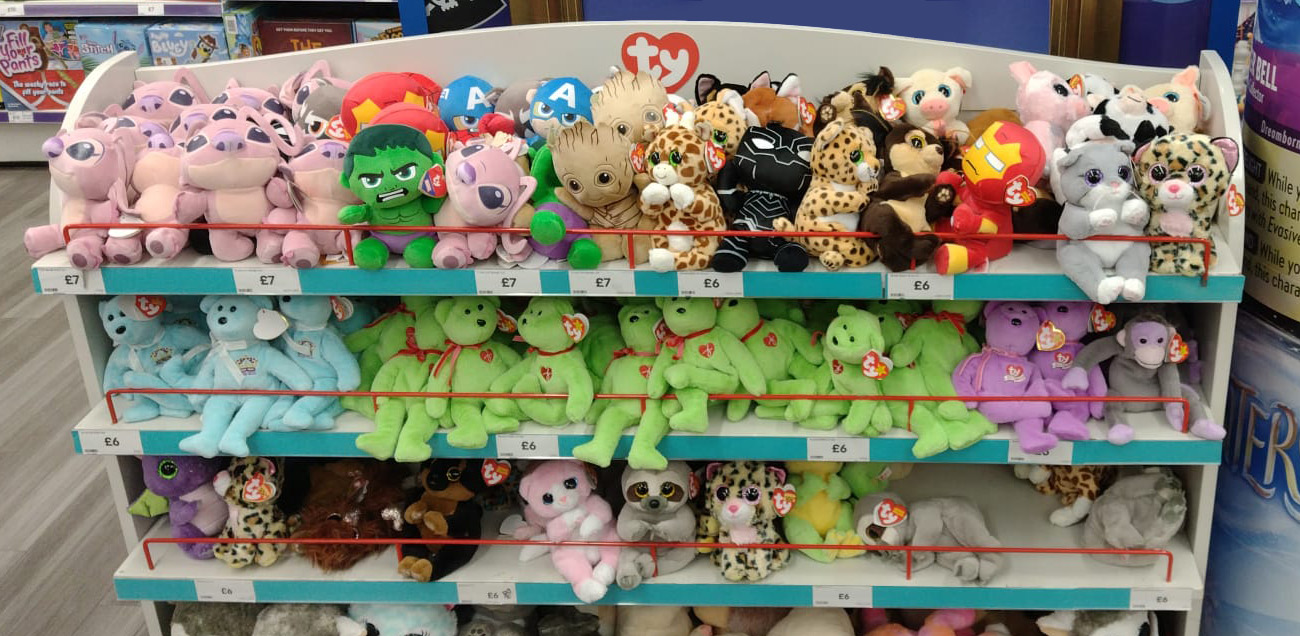
Producers of soft toys, Ty toys will be familiar to many who remember the ‘90s, when their iconic range of Beanie Babies took the world by storm. Still going strong, the company continue to make the cuddliest of creations with those two letters signalling quality collectables that are lovable, huggable fun!
But what does Ty stand for? Well, the answer is surprisingly simple and reveals the origins of a squishy empire that still delights children and adults today.
Many have assumed the Ty is an abbreviation of “thank you” or something else but it comes from the founder Ty Warner.
Simply named after the man who started the business, those two letters have now become an instantly recognisable brand, as they appear on the red and white, heart shaped labels that mark out genuine Ty products.
Not just a way of distinguishing their toys on shelves, this personal touch also signals Warner’s hands on involvement in the business, where he personally approves every design, making sure that every product they put out is a high-quality item that can be loved and played with for a long time to come.
Warner himself started out his career in soft toys by working as a salesman for Dakin but soon found himself developing his own ideas and landed himself in hot water for selling his own toys to Dakin’s customers, losing his job with them in 1980.
Warner wanted to create better quality plush toys and dreamt of doing more in the toy industry. By 1986, he’d set up his own business and started selling stuffed cat and dog toys inspired by similar items he saw in Italy, and Ty inc. was born.
In 1993, the first Beanie Babies launched as small, soft animals that were under stuffed with plastic beans so they could be easily posed, making them perfect for collectors who wanted to display them.
Focussing on selling these to independent toy stores for between $5 and $10, demand was generated by creating limited stock and discontinuing older lines. As such, a secondary market sprung up around collectors selling on rarer items and demand for these cuties dramatically increased.
In 1995, Ty became the first business to launch a direct-to-consumer website on the fledgling internet, getting in on the ground level of online shopping and expanding the craze for Beanie Babies worldwide.
By 1999, Beanie Babies had hit their peak with rare toys selling for thousands, authentication services popping up to confirm you’d bought the real thing and massive price guides that looked more akin to phonebooks. People even used them as investment funds with one couple even infamously fighting over them in divorce court.
The popularity of Beanie Babies came about because they were cheap, cute and collectable. Anyone could start a collection and then the fun came from trying to find rare or valuable ones.
The carefully manufactured scarcity set a template for collectables and influenced social behaviours with queuing for new releases and unboxing videos etc. becoming part of the norm.
By the year 2000, the beanie bubble had burst, and the toys became common place. However, Ty had firmly established itself as a much-respected seller of high-quality soft toys beloved the world over.
The first nine Beanie Babies, launched in 1993, are: Legs the Frog, Squealer the Pig, Spot the Dog, Flash the Dolphin, Splash the Whale, Chocolate the Moose, Patti the Platypus, Brownie the Bear (later renamed Cubbie), and Pinchers the Lobster. These were what initially drove the Beanie Baby craze as collectors sought out these super rare Beanie Babies with tags in good order and markers showing which generation they were.
Limited editions further fuelled the mania but as the market became flooded by Beanie Babies, demand slowed, and the company had to learn to adapt to a post-craze world.
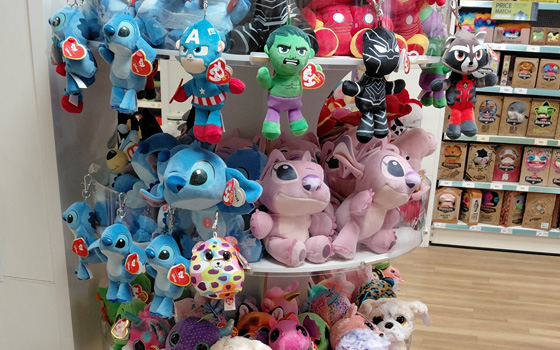
Moving beyond their own designs, Ty started collaborating with other brands for toys that represented film and TV characters like Lilo and Stitch, Paddington, and Bluey who all appear as Beanie Babies.
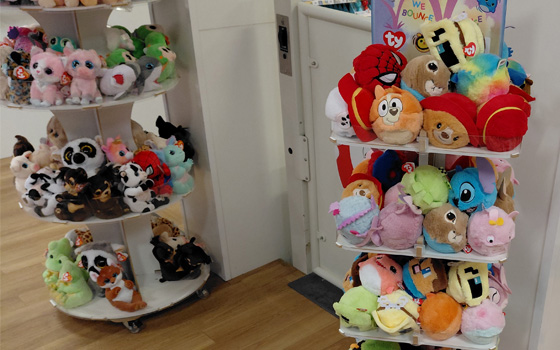
Ty also introduced lines like Beanie Boos, which are stuffed toys with massive eyes for a cute, childlike look, Beanie Bouncers, bouncy balls with a soft character covering, and Squish-a-Boos, that ride the squishy trend alongside the likes of Squishmallows and others.
Ty continue to innovate in the soft toy space with modern lines coming out all the time with reversible toys like Flippables, and Beanie Bellies, made from Ty’s softest velvet and with squishy tummies perfect for cuddles that are suitable for any age.
All Ty products come with two tags, a hang tag and a tush tag. Hang tags are paper tags held on by a plastic attachers and will always be a red heart shape with white “ty” text. There are several generations of this tag and by identifying the style of it you can tell which generation your Ty toy is.
Tush tags are the fabric tag sewn into the seam of the toy and can also signal which generation of toy you have via their design, so it’s always worth looking these up before you buy. You can use these designs to verify the toy alongside its age.
There are also quality markers to look out for as Ty have always gone out of their way to manufacture premium products. Make sure the stitching quality is good, the fabric feels soft to touch and that the toy is the proper size and colour.
Whilst the Beanie Baby bubble has burst, collecting Ty Toys can still be great fun and older iterations still hold some value, although no where near their peak.
If you wanted to start a collection today, it’s probably best to focus on your favourites and not trying to accumulate value. Connect with collecting communities and store your toys well to make sure they last.
Look for pocket money collectables for young ones who are more likely to trade and share their collectables.
Ty warner is still the CEO and sole owner of Ty Inc. and still takes a very hands-on role. Whilst very private and rarely giving interviews, he takes an active role in the company and is known for his philanthropy.
Old Beanie Babies can still fetch more than their initial retail value depending on their age, quality and desirability but they don’t reach the heights they once did. No longer do they go for thousands, and a particularly rare one might generate over a hundred pounds if you’re very, very lucky. You’re more likely to make dozens of pounds than any big money but there’s some value still out there.
The first nine Beanie Babies, launched in 1993, are: Legs the Frog, Squealer the Pig, Spot the Dog, Flash the Dolphin, Splash the Whale, Chocolate the Moose, Patti the Platypus, Brownie the Bear (later renamed Cubbie), and Pinchers the Lobster.
In general, Beanie Babies should always have a red and white heart shaped tag. However, the hue of this red may vary depending on the edition (age) of the toy and some special editions did feature different colours.
Most Ty toys will have a name on their label so look up that product online to find out how rare it is and its desirability using its exact name for accuracy.
The legacy of Ty is largely tied to the success of their Beanie Babies brand but with exciting products coming from them all the time, the future continues to look bright for them, and they remain a favourite for children and adults alike.
They continue to bring joy and stand as a testament to quality innovation and collectability.
Read our disclaimers.