 Free Click & Collect within 30 minutes
 Free delivery on orders over £39.99
 Free Next Day Delivery on orders over £75
 Gift Cards available

How to Store Children’s Toys: A Complete Organisation Guide
12 min read
Last Modified 31 March 2026 First Added 31 March 2026
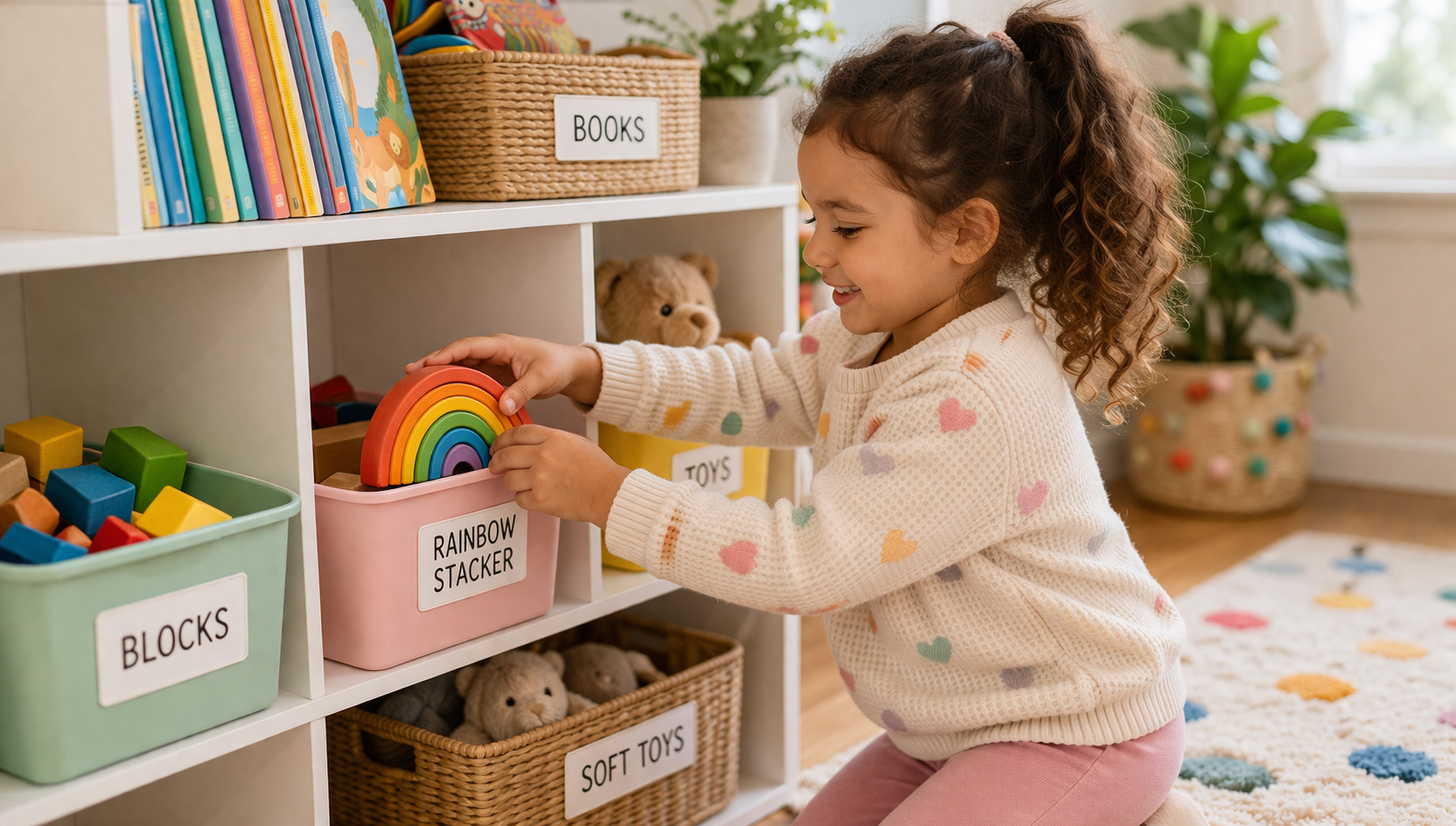
Toys are great but we recognise that keeping them can cause absolute chaos. Every parent has faced the problem of trying to store them in a neat and tidy way, preferably in one place, and then dealing with the common frustration of seeing that space rapidly become a cluttered mess again.
Toy cars and loose LEGO bricks suddenly become hazards as you pick your way through the carnage trying not to end up on the floor with everything else or with a serious foot injury caused by a plastic building block. However, with some practical furniture choices and simple storage solutions, you can go some way to returning your home to a calmer state. We’re not promising the Instagram perfect, model home here but we may have some achievable solutions that can help make it feel a little more relaxing once again.
Before you begin the great tidying, you will want to start with a toy audit. This will allow you to visualise what you are dealing with and how much you have to find space for. It will also assist in encouraging children to consider parting with some toys.
This can be emotionally difficult but if children understand how much they have and see everything they no longer (or rarely) play with, it might help them towards moving some items on. Explain to them the act of donating, and how it can help other children find something they’ll love. Younger children may only be able to part with one thing while older ones may be more proactive into sorting them into categories. This helps them become a part of the organisation process too so that they don’t feel decisions have been made without them.
Make sure to measure spaces before you start considering storage solutions, otherwise you could end up with something that just clutters up a room in a new way. Avoid costly mistakes and make the most of what you already have before adding to your household items.
Building Toys (LEGO, Duplo, Blocks etc.)
Building blocks are a unique storage challenge in which they seem to constantly multiply and also have tiny pieces. Children need to find specific parts for their builds, and quite often, they’ll require display space for a completed project. As such, sorting can become quite important but finding the right organisational method for you is key.
You can organise blocks by colour, size, type or set, but each of these methods has their own pros and cons. If you organise by set, keeping boxes and instruction manuals are useful and lets you perform a build time and again, but it also restricts free building and combining your bricks.
Having your bricks colour coordinated is great for aesthetically focused builders but can cause issues when looking for specific bricks and the opposite is true if you organise by size or shape. Using clear containers helps too so bricks can be identified without having to be poured out on the floor. You can also theme your storage, with multicoloured LEGO block storage. Try yellow for yellow etc.
Soft toys are an emotional minefield. Often associated with happy memories and all with their own personalities and back stories, encouraging children to part with them is not always easy. However, the number of soft toys children often accumulate compared to how many they actually play with can be quite disproportionate, so gently pointing that out may encourage them to donate a few to others.
Even if you do manage to shed a few furry friends, there’s likely to still be a fair share of teddy bears picnicking around your house. Control these critters with some imaginative storage solutions like storage hammocks. These can be hung above beds or play areas to keep floors tidy but can be easily accessed for quick cuddles or spontaneous squeezes. Breathable baskets or ‘teddy bins’ can also serve as a good place to keep your cuddly companions.
Tiny toys can bring terror to a household as they seemingly migrate on their own accord and can be found all over the house if not kept well contained. Action toys often end up in all sorts of bizarre situations as they leap, jump and hide in order to save the day, so having a committed space to keep them, once the heroics are done, can really help keep a space tidy.
Dedicated toy organisers can wrangle wayward figurines, especially if they have compartments for sets and collections. Keeping an inventory of collections can help identify what’s missing and may discourage the ‘toy creep’ of small playthings slowly colonising the house.
Controlling messy creative materials can be challenging. You don’t want to dampen the enthusiasm of artistic young minds, but you’ll want to balance that with keeping mess safely contained. Half-finished projects and artwork storage are also a tricky consideration. Where do you put these masterpieces, especially if you have a rather prolific creator, and how long do you hold onto something that’s not quite finished if it’s taking up space?
Dedicated areas for arts and craft supplies can make sure the mess remains in one place. Wipe clean storage solutions make for easier maintenance, and you can carry this over to art sessions with plastic sheets for tables and other surfaces, to keep them looking good when used elsewhere.
Regular supply audits help keep a handle on what bits and bobs you have for future projects, as well as what needs replacing. Dried paints and used up glue sticks are not worth holding on to so make sure you know what’s in your cupboards.
Holding onto an adult living space while accommodating toys is no mean feat. Furniture that doubles as storage can lend a stylish air to a room while offering somewhere to surreptitiously store playthings. Ottomans, sideboards, and coffee tables with hidden compartments can all stash fun things out of sight yet make them readily available for when playtime begins.
Stylish storage baskets that match your décor can also add options for happy hideaways of toys and games. Whatever you do, there needs to be some acceptance of toys in shared spaces as they inevitably make the most of household settings to play out the most imaginative of scenes.
First and foremost, a bedroom should be a calm place to sleep. It remains a refuge for work and play but having spaces to effectively store toys can help in not making it too overstimulating.
Utilise under bed storage effectively and other easily accessible places so that toys can be reached without potential calamities. Avoid tall furniture and climbing hazards and consider rotating toy access if necessary.
If you’re lucky enough to have a specific play space, then dedicated storage may well be the way to go. Consider zoning areas for quiet play, creativity or active play and label storage accordingly.
Things like toy chests are great for creating systems that children can maintain independently, especially if they are labelled. But even the most organised of playrooms can get messy so don’t fret too much if they do and try to ensure the chaos stays in one room.
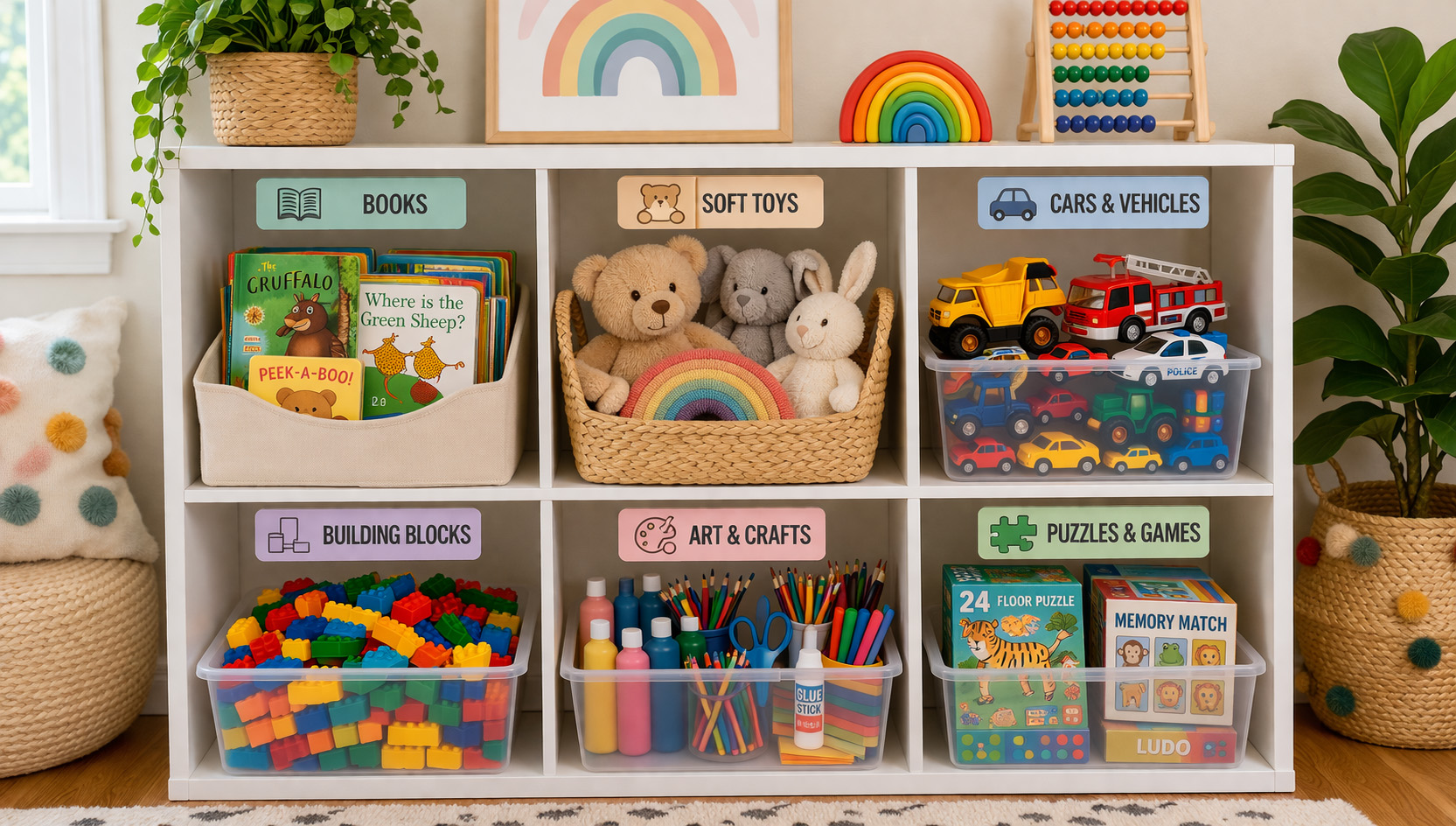
For young children just starting to discover the world on their own, prioritise safety and accessibility. Low and stable storage that can’t be toppled by toddlers is a good way to go, with soft edges and rounded corners to prevent pokes and scrapes.
Picture labels may be a better way of categorising things rather than words so non-speakers can associate the picture with the object. Rotate toys so children don’t lose interest, with fewer options also less likely to overwhelm little ones.
As children start to reach an age where you want to begin fostering independence, storage at child height that they can get into may be more appropriate. Simple sorting systems can be achieved through labelling, where a combination of words and pictures may be useful.
Choose places that can be easily got at so as not to cause a toy avalanche when getting items out, and try to make tidying a game in and of itself so as to prevent it being seen as too much of a chore.
You may wish to start developing a more sophisticated sorting system where children can start to take ownership of their own toy storage. As toys start to evolve into collections and hobbies, they can decide on displays and personal systems that make sense to them.
Clear out things that are too young for them and make more space for what they are passionate about, creating space for them to explore how they can indulge those interests.
Keeping on top of tidying up is often an uphill battle. Simple suggestions can help maintain a storage system. Encourage some boundaries by making sure one set of toys are put away before the next are played with and by providing readily available storage.
A 10-minute tidy session before bedtime can also help keep mess levels low. Maybe try making a game of it with age-appropriate responsibility charts and reward systems or making it a part of play itself by “putting the toys to bed”. A regular ‘health check’ on your system will let you know if it’s working and if there are any missing toys, broken pieces or things that simply aren’t played with anymore.
System failures can occur when you let tidying slide or things get put back in the wrong place. Don’t let apathy set in and have regular de-cluttering sessions, with just before birthdays and Christmas being a good time to assess what no longer captures their interest.
While you may be eager to get underway with organising the toys taking over your home, there are some common mistakes to avoid. Everyone gets tripped up from time to time so don’t beat yourself up over letting it get away from you but by knowing what to expect ahead of time, you can reduce the likelihood of issues arising.
Make sure you have the space to fit storage solutions in to. Measure up your room before buying any drawers or putting up shelves and get an understanding of where things will go. You also don’t want storage that’s too high for little arms to reach, or opaque containers that are likely to be tipped out in search of a single item.
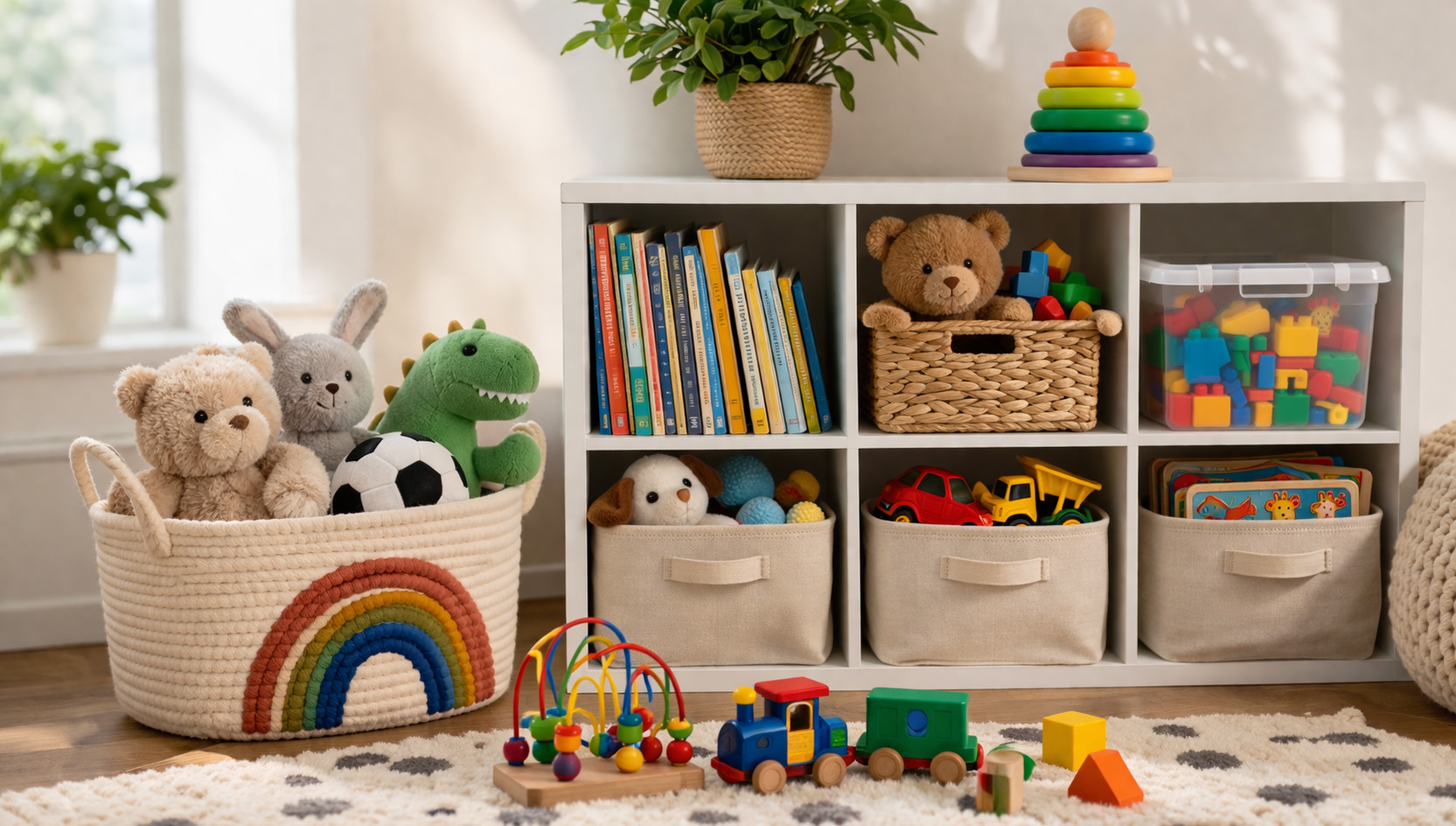
There is no definitive answer to this but creating a realistic schedule around the rate at which you get new toys, as well as how many people in your household you have playing with them can help in understanding what you have. Major clear-outs before events where you’re likely to get toys gifted (like birthdays or Christmas) can help keep clutter to a minimum. Get everyone involved so children have agency over what stays and what goes, and the experience will be less painful for them too.
Vertical storage and multi-functional furniture can really make the most of smaller spaces, with under bed storage also a great way to keep things tidy. Over door organisers and wall-mounted solutions can also come in handy but be realistic about your space limitations and limit the number of toys that come into the home.
For younger children, making tidying fun is a key factor to getting them involved. Make it part of play or create a narrative around how the toys need to rest when they’re done playing to encourage them to pt things away once they’re finished.
Older children may respond better to ownership of storage systems and knowing where their toys are kept. Celebrate their successes rather than criticise their failures and the results will speak for themselves.
This is a tricky question for families that have multiple children playing with toys. Coming up with sharing strategies is always positive but giving children individual ownership over items instils a sense of pride and care in their items.
If children have different interests or there’s a large age gap, then sorting toys by child can make sense with out too much issue but if there’s a lot of communal toys to play with then sorting them by type may well cause less headaches when it comes to getting them out again.
There is no perfect storage solution or one-size-fits-all answer to keeping toys organised, so finding what suits your needs best is what will have the most impact. Teaching children to care for their belongings is a valuable life skill and worth the effort of encouraging them to do.
Lead by example and start small rather than organising the whole house at once. Even the smallest of improvements can make daily life easier and knowing where things are can make rest and play that much more enjoyable.
Read our disclaimers.